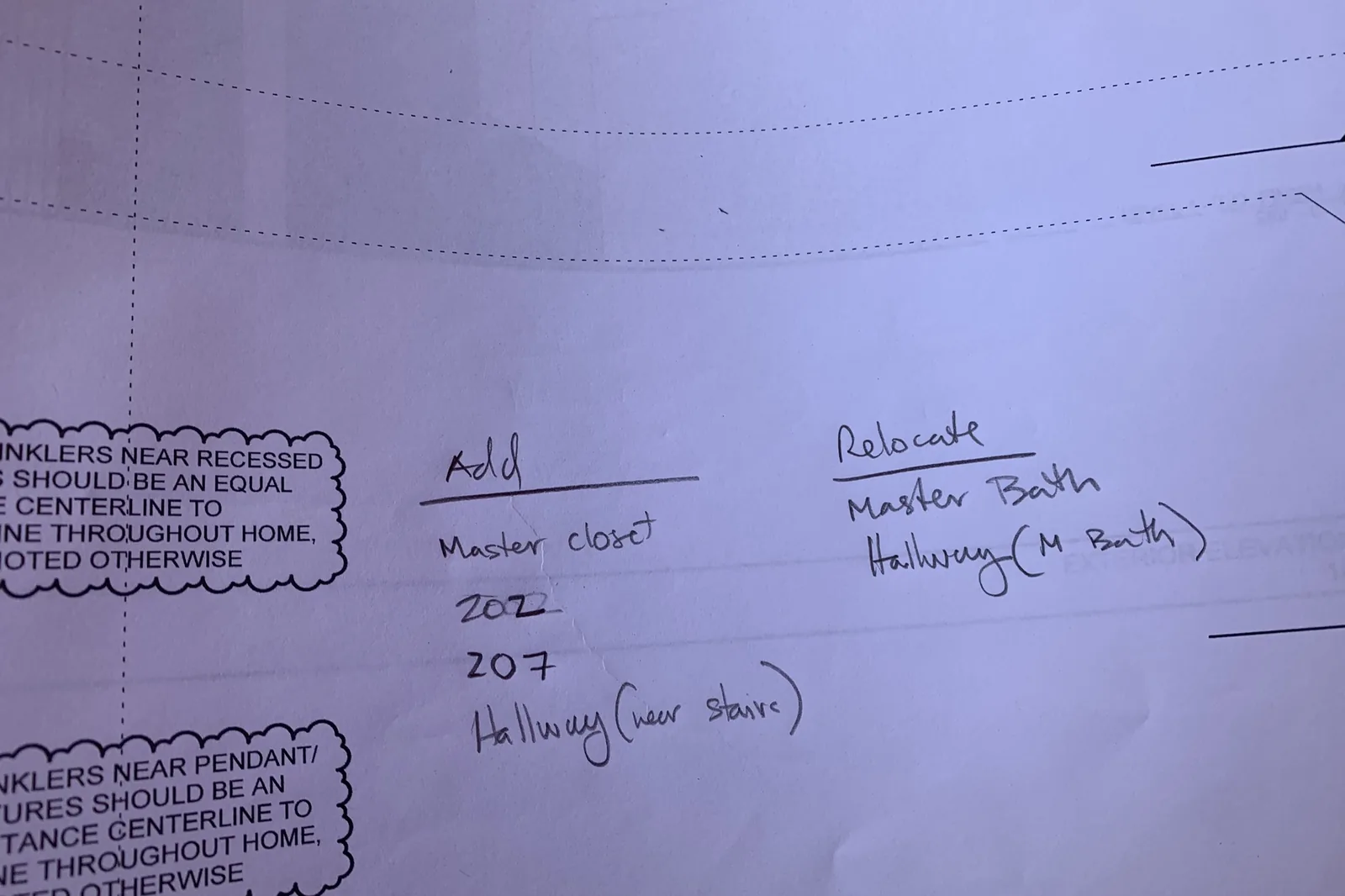
Akopi Builders project: owner changes marked on the drawing set for a home in Santa Monica.
For most Los Angeles custom homes, the choice that matters is not one company or two. It is whether a builder prices the house while the design can still change. Hiring your own architect and a separate builder keeps the architect working only for you; design-build puts design and construction under one contract and one point of contact. Either can work if the first budget check happens early. Architect fees on a custom home usually run about 8 to 15 percent of construction cost. Akopi Builders (CSLB 1112420) is a Los Angeles general contractor that builds custom homes in Beverly Hills, Bel Air, Brentwood and across LA from the owner’s architect’s drawings, and joins early for preconstruction pricing. This guide sets out both routes plainly.
You have an architect’s proposal on the table and a design-build proposal beside it. One prices the drawings. The other seems to promise the whole house. The smaller number is not necessarily the cheaper route, and neither tells you when someone will check whether the house fits your budget. Here is how to compare the teams, the fees and the protection behind each proposal.
You can bring the builder in early without giving up your architect
There are three arrangements worth separating:
- Design-bid-build. You hire the architect to design the house, then ask builders to price the completed drawings. The architect works directly for you, and you sign a separate construction contract with the selected builder. You can compare bids against the same design, but the first detailed builder pricing arrives late.
- An architect with an early builder. You hire your architect separately and bring a builder into design for preconstruction, the work of checking cost and buildability before construction starts. You may then negotiate the construction contract with that builder rather than run a full bid. Your architect still works for you. Agree on the preconstruction fee and whether you remain free to choose another builder.
- Design-build. One entity takes contractual responsibility for both design and construction. The architect or designer works within that team, rather than under a separate appointment from you. Read the actual agreements: a shared logo is not a substitute for clear responsibility.
One company means one phone number and fewer handoffs. Two appointments mean your architect answers to you and to nobody else. Either way, there is nothing stopping a builder from pricing the drawings while they are still drawings.
You do not have to wait for finished plans to talk about money.
Compare the design scope before you compare the fee
Architect fees on a custom home usually land around 8 to 15 percent of construction cost, and the published outer edges run from 5 to 20 percent. Those are planning numbers, not a Los Angeles fee schedule and not an Akopi quote.
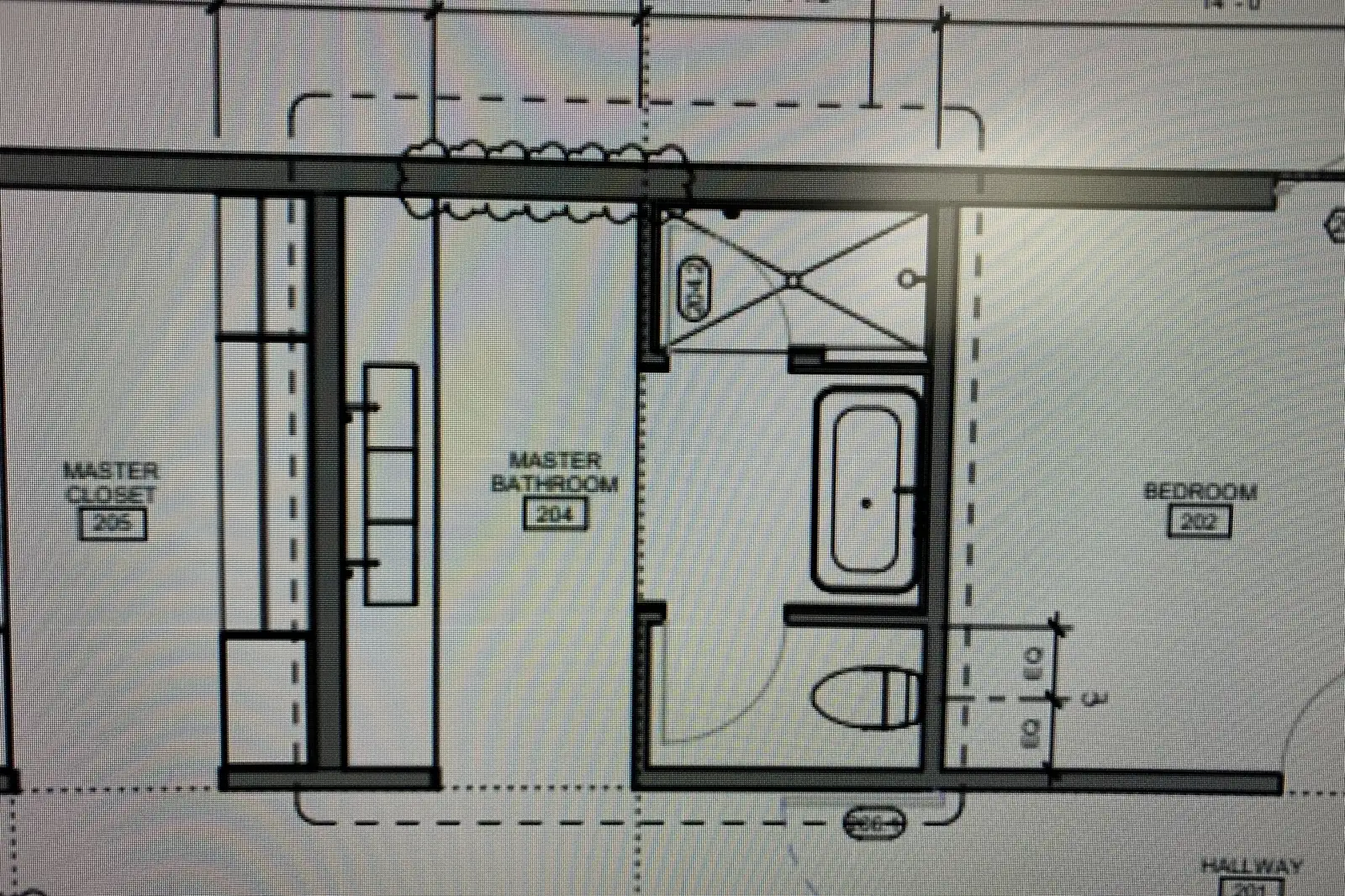
Akopi Builders project: the primary suite sheet from the architect drawing set for a home in Santa Monica.
On a $2 million construction budget, 8 to 15 percent means $160,000 to $300,000. That calculation uses construction cost, not land or your entire project budget. Ask what cost the percentage applies to and whether the fee changes if the construction estimate rises.
An architect may instead quote a fixed fee, an agreed amount for a defined scope, or charge hourly for certain work. A fixed fee is useful only when you know what is fixed. Compare these inclusions in writing:
- The design and drawings. Does the fee stop at permit drawings, or include the details needed to price and build the house you expect?
- The consultants. Are structural engineering and other specialist fees included, separate or still to be determined?
- The revisions. What happens if the first construction price requires a smaller house or a different window package?
- The construction visits. Is the architect retained to review work on site, and what service is actually included?
Nobody publishes a reliable range for what a design-build firm charges for its design phase, so treat any figure you are handed as that one firm’s number. Ask each firm to separate its design fee from construction pricing and to spell out any credit if you go ahead. Ask what you can take to another builder if you stop after design.
A bundled fee is not free design.
The first budget check belongs before you fall in love with the drawings
A beautiful house that comes back over budget leaves you paying for decisions twice: once to draw them, then again to change them. Early pricing is valuable because it gives you a chance to keep what matters most before the rest of the house is designed around it.
Take a living room with a broad opening onto the garden. You may care deeply about that view and much less about the size of the guest wing. Ask for a budget check while those choices are still movable, not after every room has been detailed around them.
Ask the proposed builder: “At what design stage will you price this house, and what will still be an assumption?” A useful estimate separates priced work from allowances, amounts reserved for things not yet fully selected, and exclusions, work not included at all.
Competitive bidding can help test the price. But a lower allowance for the same windows makes one bid look cheaper without making your house cheaper. Ask for those differences to be reconciled before you choose.
Neither arrangement eliminates change orders, written changes to the agreed work, price or time. Before signing, establish how changes will be priced and approved, including what happens when a drawing needs correcting. Do not assume that one company absorbs every design problem, or that two companies leave every problem with you. The contracts decide that.
The team arrangement is not the price guarantee.
Know who reviews the work, and who they work for
A separately appointed architect can review construction against your drawings on your behalf, if you retain that service. Some fee proposals include a measure of it and plenty do not, and periodic visits are not continuous supervision. Read what the proposal actually promises.
In design-build, design review happens inside the same contractual team that is building the house. That does not make the work inferior. It does mean you should ask who checks it, and whether you want a separately retained architect or other qualified reviewer for an independent view.
The word “design” also tells you nothing about who holds a professional license. California lets unlicensed people prepare plans for certain wood-frame single-family homes of no more than two stories and a basement. That is not a blanket exemption for every custom home, and work beyond those design limits can require a licensed architect or engineer.
A contractor’s own design work is limited the same way: under Business and Professions Code section 5537.2, design beyond those limits has to be done by, or under, a licensed architect or engineer. A business offering architectural services has to have a licensed architect in management control, with the professional work under that architect’s responsible control. Putting design and construction under one roof does not remove those obligations.
Ask for the name and license of the professional responsible for your design, and identify the licensed builder named in the construction agreement. Have your construction lawyer confirm which California contract rules apply to your project rather than assuming a whole-house remodel and a ground-up home carry identical requirements.
Responsibility needs a name.
A hillside address changes the price, not just the view
In Beverly Hills, Bel Air, Brentwood, the Palisades and Malibu, construction costs more than in most of Los Angeles because parking is scarce, traffic is slow and many lots are on narrow hillside streets. That is not a markup for the zip code. It is the hours. Our custom home cost per square foot guide shows the ranges by area.
If you are comparing teams for Beverly Hills, Bel Air, Brentwood or Malibu, ask each of them to explain their access assumptions for your actual address. Where can deliveries stop? Where can material be stored? How do the crews reach the site? Do not accept a neighborhood premium without an explanation of the work behind it.
On a hillside, ask your architect which hillside rules, including the Baseline Hillside Ordinance where it applies, affect the house being proposed. Then ask the builder to price the resulting design and the access that comes with it. A generic citywide construction range cannot settle a lot-specific problem.
The same caution applies to speed. Design-build can cut handoffs between design and construction. An early builder can flag expensive choices before the drawings are finished. Neither arrangement, on its own, buys you a permit date. Nobody publishes a Los Angeles permit-time saving that can honestly be credited to one delivery method over the other.
Ask each team for a schedule that separates its own drawing time from agency review and revisions. Then you can see which part of the calendar they actually control.
Before you sign, put both proposals through the same test
Your next step is to ask both teams for the same scope and the same budget checkpoints, in writing. You do not need to become a construction manager to compare them.
- Who holds the design contract? Decide whether you want your architect appointed directly by you or working within the design-build team.
- When does construction pricing enter the design? Identify the first budget check and who pays for redesign if the house exceeds the agreed budget.
- What does the fee leave out? Compare consultants, revisions and site review, not just the total on the proposal’s last page.
- Who reviews the built work for you? Confirm the service and the person, rather than relying on a general promise of oversight.
- What happens if you change teams? Establish payment obligations and rights to use the drawings before you need them.
If a direct relationship with your architect and separately appointed review matter most to you, hire the architect separately and bring a builder in for preconstruction. If you would rather have one entity responsible for both, consider design-build, with the pricing and review provisions written down.
Either way, get the first budget check onto the calendar.
How Akopi joins the design conversation
Akopi Builders builds from your architect’s drawings. We read the full set before pricing, flag conflicts in preconstruction, and build the house the architect drew, so your architect stays appointed by you. If you already have an architect, the useful time to bring a builder in is before the drawings are finished, while a budget check can still change the design. Our guide for architects explains how we work with design teams, and the new house permits guide covers the City of Los Angeles steps that follow the drawings.
So go back to the two proposals on your table. The better question is not which one has the smaller design fee. It is which team makes the cost of your house visible before you commit to the next stage.
Akopi Builders is a licensed California general contractor in Los Angeles, CSLB 1112420. If you already have an architect, talk with us about early preconstruction before the drawings are finished.
Next step
Start with a conversation.
Tell us about your space and you'll get a clear, honest read on the work, electrical included.