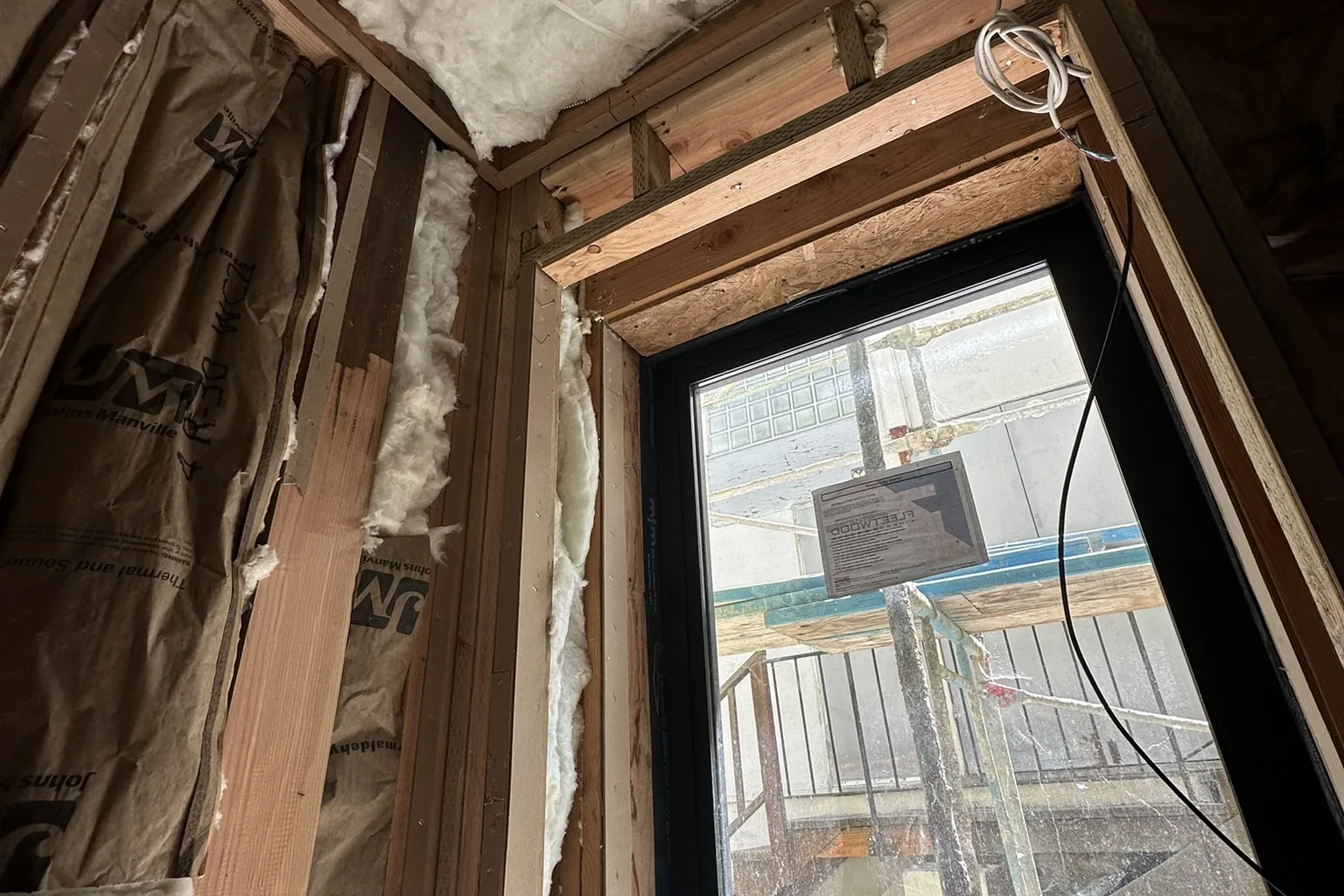
Akopi Builders project: framing, insulation and a new window on a custom home in Bel Air.
The framing invoice arrives, and for the first time you can walk the rooms of your own house. The window openings are empty, lumber is still stacked in the driveway, and you cannot tell whether “framing complete” means what you thought it meant. That is a bad moment to find out the contract never said. Here is how to read a draw schedule, what should be finished before you release each payment, and where your money can get ahead of the house.
How much can a contractor ask for upfront in California?
On a home improvement contract, which is what a remodel of your own house is, the down payment cannot be more than $1,000 or 10 percent of the contract price, whichever is less. A whole-house remodel does not earn a bigger deposit for being expensive. On a $2 million remodel, the limit is still $1,000.
Special-order windows or cabinetry do not change that. There is one narrow exception, for a contractor who keeps a blanket performance and payment bond on file with the state licensing board. If anyone claims it, check that it is real before you pay more.
Those are the home improvement rules. Do not assume the same cap covers a ground-up new house: the cap is written for home improvement work, and which payment rules govern your contract is a question for your construction attorney before you sign.
After the deposit, a draw is simply a progress payment against the contract. On home improvement work, those payments cannot run ahead of the value of the work completed and the materials delivered. Calling an advance a framing draw does not turn it into finished framing.
The label does not decide what is owed.
”Framing complete” needs to mean something you can check
A draw schedule ties each amount to a defined piece of finished work, not to a date on the calendar. The whole argument of this piece, in one sentence: every payment should name the finished work or delivered material it buys, so you can check it before you release the money.
If you are paying in stages, the schedule has to list each payment amount and describe the work, materials or services it covers. “Second payment” tells you nothing. “Framing” is better, and it still leaves room to argue.
Before you sign, have your builder walk you through the proposed milestones. These are examples of the distinctions worth putting into words, not a schedule to copy:
- The framing payment. Name which walls, floors and roof framing have to be up, and say whether the framing inspection is part of the milestone. Lumber in the driveway is not a wall.
- The weather-tight payment. If it means the house is closed to rain, say what has to be installed: roofing, windows, exterior doors, and the flashing and weatherproofing that go with them. A roof alone leaves the openings open.
- The cabinetry payment. Cabinets delivered and cabinets installed are two different things. Say whether doors, drawer fronts and hardware sit in that payment or a later one.
Back at the framed house, those empty window openings may be entirely consistent with a finished framing milestone. The invoice may be perfectly correct. The trouble is having to negotiate what it meant after it arrived.
Define completion before it becomes a bill.
A window order is not a window delivery
Long-lead items, the ones with months between the order and the delivery, need a funding plan before anyone places the order. Not a vague promise to sort the deposit out later.
The window maker may want money to start production. That does not lift the payment restrictions on your contract, and an order confirmation is not evidence that windows have been delivered.
Ask your builder how the order is being funded, when your payment falls due, and where that payment will show up in the contract balance. If the answer asks you to advance money for materials that are not there yet, have your attorney look at it first. A separate invoice from a supplier does not make the arrangement permissible.
On a ground-up house, have the contract spell out what happens to materials stored off site: who owns them, who insures them, and what delivery you are owed. You should not have to guess where paid-for windows went.
Settle the money before the order goes in.
Each invoice should show what you have already paid
Before you release a draw, you should be able to lay the invoice next to the contract and the work and have the three of them agree. You are checking your own money here, not running the job.
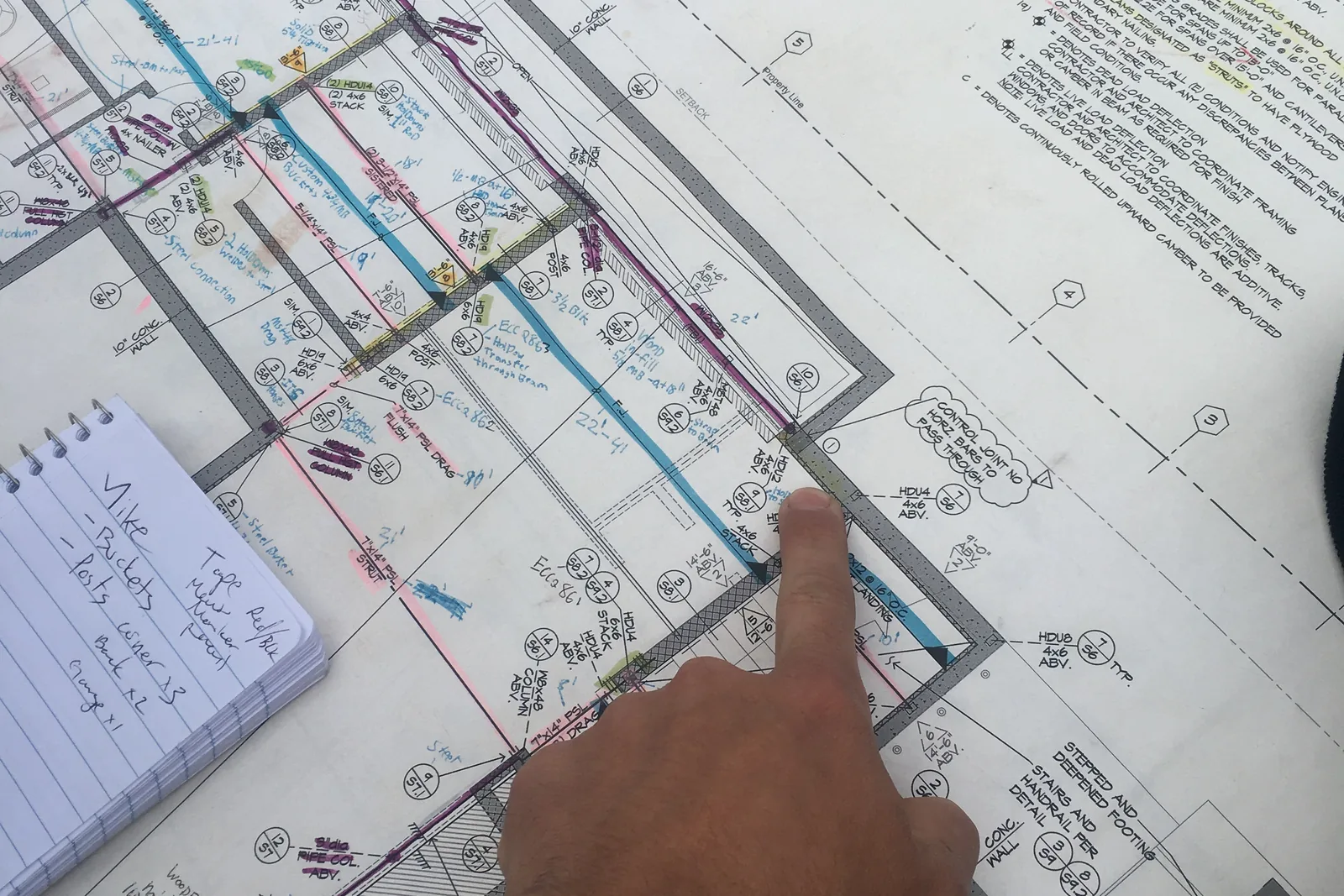
Akopi Builders project: reviewing drawings on a Santa Monica job.
Ask for a payment summary that shows:
- The current contract total. The original price, plus or minus every signed change.
- What this request covers. The milestone or the portion of work finished, in enough detail that you can go and look at it.
- What you have already paid. Including any earlier payment for materials that are only now being installed.
- This payment, and the balance left. Both visible without you having to reconstruct the account out of old emails.
This is where the windows come back into the story. If the delivered windows were billed earlier, the installation invoice should not quietly charge you for them a second time. That earlier payment has to stay visible.
A change order, the written agreement that changes the work and the price, belongs in the same account. Both of you sign it before the changed work starts, and it should state the cost added or taken off and what it does to the payment schedule.
If a construction loan is funding the build, ask the lender how long a draw takes to come out, and ask before you sign anything. Five to ten business days is common, and longer when paperwork is missing or the inspector is backed up. The trades on your job expect paying when their scope is done, not when the bank gets around to it, so everyone needs the real timing in advance.
Every payment needs a place in the balance.
Agree on the last payment while you still have choices
The conditions on the final payment belong in the original contract, not in a conversation beside a moving truck.
Ask what has to be finished before it falls due: the final inspection signed off, the punch list closed, the site cleaned, the manuals and warranties in your hands. The punch list, the written list of unfinished and corrective items, needs an agreed way of being closed out. Otherwise it closes out by attrition.
If the contract holds money back, which is retainage, the amount and the conditions for releasing it should be written out plainly. Do not pull a percentage off a national payment template, and do not decide to withhold something new on your own at the end. Nobody publishes a reliable customary figure for retention on private residential work in California, so what matters is what your contract says and whether your attorney has read it.
Your next step is simple. Put the proposed schedule beside the scope of work, and for every payment ask your builder what exactly will be finished or delivered when it falls due, and how you will check it.
Start with the biggest one.
How Akopi approaches the payment conversation
For custom home and whole-house remodel work, ask your builder to walk the payment milestones with you before the contract is signed: what each payment covers, what has to be standing or installed for it to fall due, and how an earlier payment gets credited against a later one.
No two schedules come out identical, because no two of the houses in our portfolio of custom homes and remodels were built the same way. The test does not change. Every payment names the work it buys.
An empty window opening should not leave you wondering whether you have already paid for a finished window. Nothing on that invoice should be a surprise.
Where these numbers come from
- Contractors State License Board, Home Improvement Contracts Consumer Guide: the $1,000 or 10 percent down payment cap, the absence of an exception for special-order materials, and the blanket performance and payment bond exception.
- Contractors State License Board, Industry Bulletin 22-14, Progress Payment Restrictions: progress payments limited to the value of work performed and materials supplied, and the requirement that each staged payment state its amount and describe the work it covers.
- Contractors State License Board, Sample Home Improvement Contract, 2025: the warning that collecting payment for work not yet completed or materials not yet delivered is against the law, and change orders signed by both parties before the covered work starts, stating cost and the effect on the payment schedule.
- Construction lending guides: five to ten business days as a common draw processing time, longer when documents are incomplete or inspections are backed up.
If you would like the payment milestones on your own project set out before anything is signed, talk to us. Start with the work each payment buys.
Next step
Start with a conversation.
Tell us about your space and you'll get a clear, honest read on the work, electrical included.