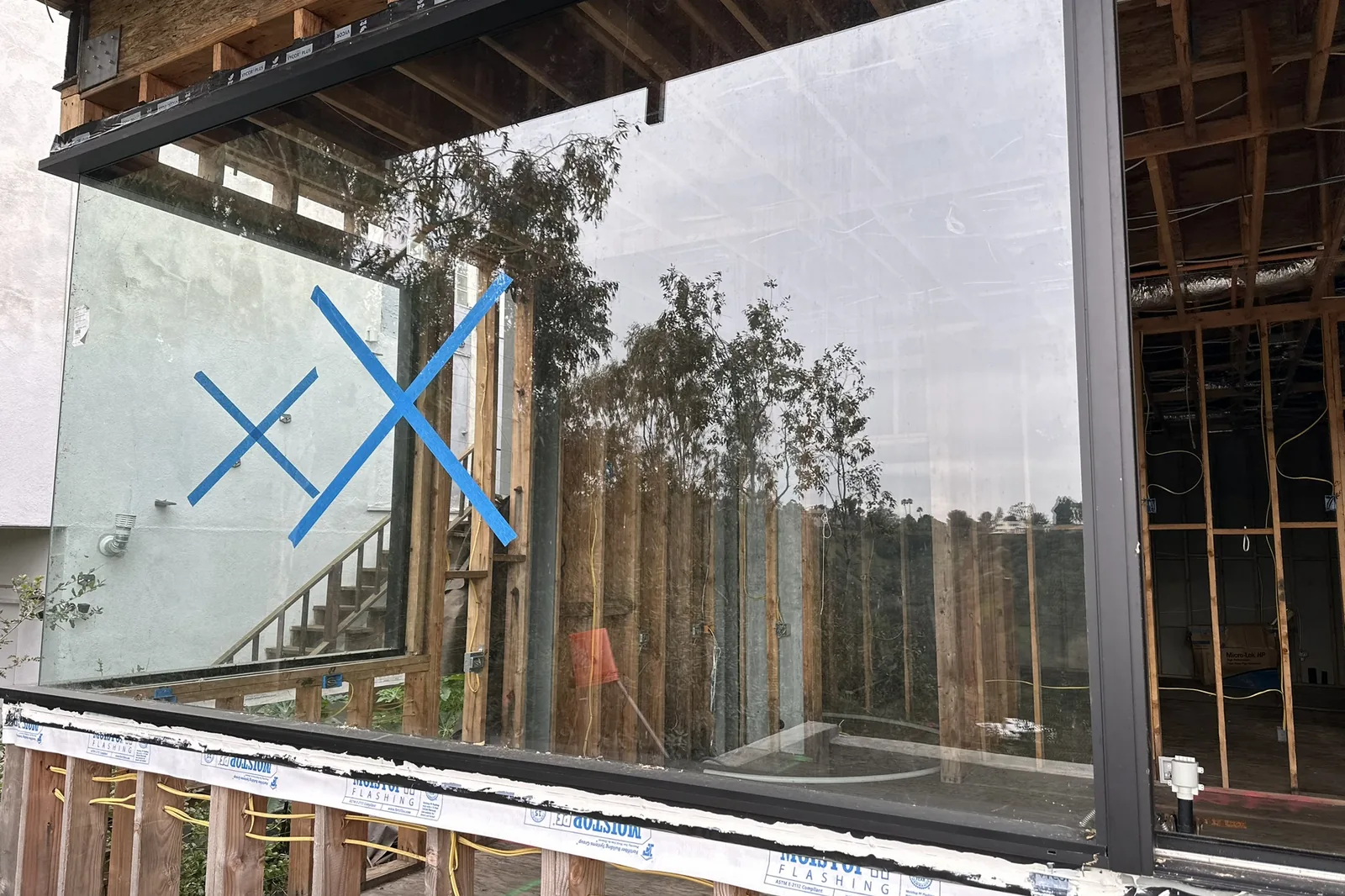
Akopi Builders project: a large window set during construction of a custom home in Bel Air.
You can lose a finish date before anyone hangs drywall. On a custom home or a whole-house remodel, the quiet schedule risk is not the last tile or the last coat of lime plaster. It is the item that had to be selected, drawn, approved, paid for and released months earlier. This covers which long lead items have to move before the drawings feel finished, and how to find the one setting your finish date.
The finish date is usually set by dry-in, not by paint
The item most likely to control the finish date is the exterior window and door package, because it controls dry-in.
Dry-in is not a mood. It is a milestone you can stand in front of: roof on, window openings closed, exterior doors installed, waterproofing tied into the frames, and the building no longer relying on plywood, plastic or luck to keep weather out.
A lot can happen before that. Framing can move. Rough plumbing, rough electrical and rough HVAC can move. Some inspections can move, depending on the sequence and what the inspector is looking at. But the interior finish work that owners see at the end, drywall, lime plaster, hardwood, casework, stone slabs, cannot be treated the same way in a house that is still open to weather.
That is why the last item you choose is not always the item that delays you. The first item you failed to release often is.
Dry-in is the date the rest of the schedule hangs on.
Windows and exterior doors are the first long lead item to test
A custom window and exterior door package can commonly run 10 to 16 weeks or more after approved shop drawings, deposit, colors, glass, hardware and opening sizes are locked. Steel windows and large lift-slide systems sit at the long end of that. A published range is not a schedule. The only number worth planning against is the one your supplier will put in writing this month.
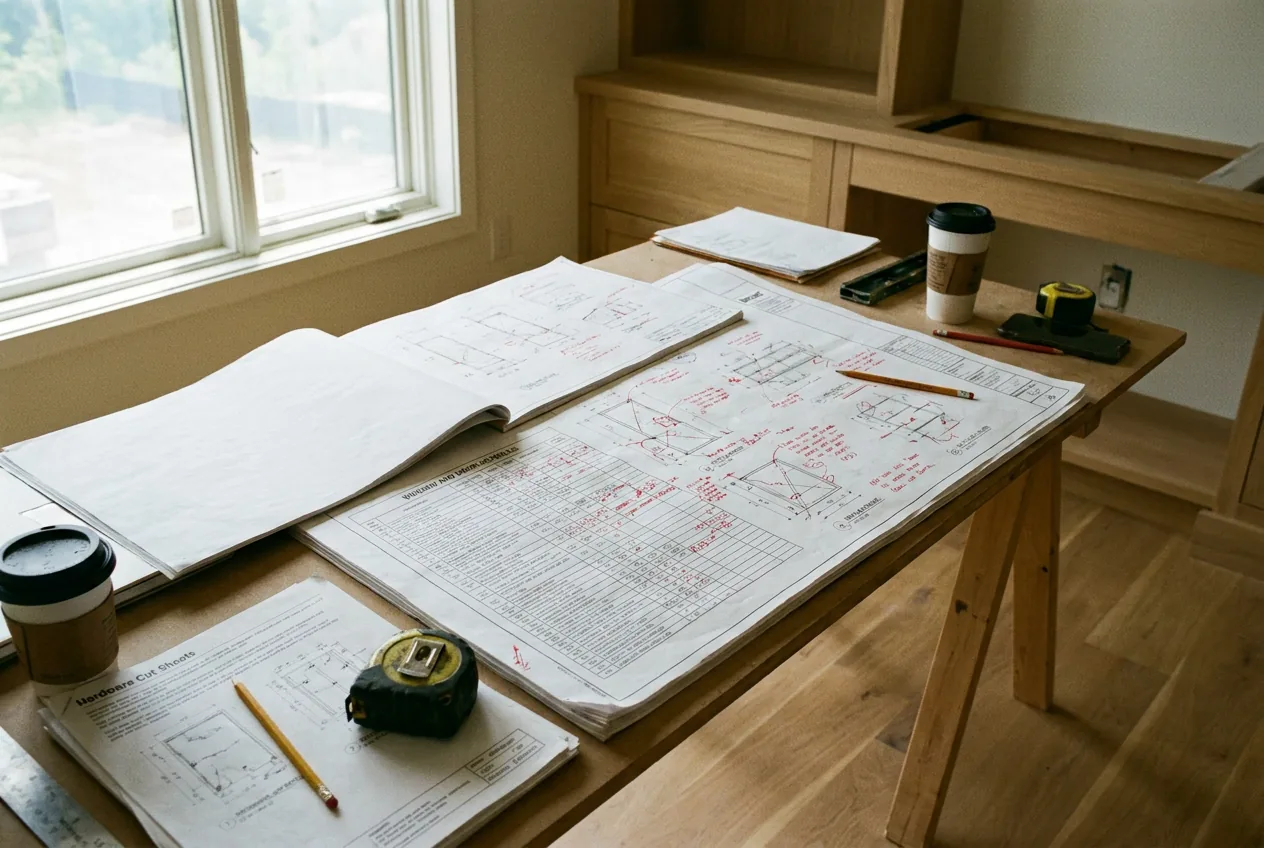
Illustration, not an Akopi project.
That clock usually does not start when the architect shows a window on the elevation. It starts when the supplier has enough information to build the actual unit. That means dimensions, operation, frame color, glass type, divided lite pattern if any, screens, hardware, sill details, drainage requirements and field conditions that match the order.
This is where projects fool themselves. A window schedule can look complete on a permit set and still not be orderable. The shop drawing may come back with a question about jamb depth. A lift-slide may need a threshold decision. A steel or aluminum system may need final color approval. A hillside house may have access limits that affect how large a unit can be delivered and set.
The test is simple. Ask the supplier what is missing before the order can be released, not what is missing before the drawings look finished.
The release date is the real date.
Some choices have to be made early, even if the room is not designed
You do not have to finish every interior decision before construction starts. You do have to make the choices that fix openings, clearances, rough-ins and shop drawings.
The early list is smaller than owners fear, but each item matters:
-
Exterior windows and doors. These control dry-in, waterproofing details, stucco or siding returns, sill heights, and the window performance numbers the Title 24 energy calculations depend on. They should be selected early enough for shop drawings to be checked before the release date.
-
Appliances that set cabinet openings. Refrigerators, freezer columns, ranges, wall ovens, coffee systems and wine units do not all need to be on site early. Their cut sheets do. Cabinetry cannot be drawn honestly around vague appliance categories.
-
Custom cabinetry and architectural millwork. The final box sizes often wait for field dimensions, but the wood, finish, door style, drawer hardware, appliance list and special storage decisions have to be known much earlier. Millwork commonly takes on the order of 8 to 16 weeks after approved shop drawings, and the shop’s own backlog moves that more than anything you decide.
-
Stone, tile and slab material. A stock tile is one thing. A bookmatched stone slab, a large-format porcelain panel, or a pale travertine that has to come off one bundle is another. If the material defines the bathroom layout, shower niche, drain location or slab edge, it belongs on the early list.
-
Decorative lighting and plumbing trim. The trim itself can arrive late. The parts that live inside the wall cannot. Shower valve bodies and rough-in kits, recessed housings, drivers and the dimming system have to be selected, and usually on site, before the walls and ceilings close.
-
Wellness equipment. A sauna heater, steam generator, cold plunge, chiller, drain, dedicated circuit or ventilation path can affect framing, waterproofing and service access. The finished look can come later. The equipment footprint cannot.
For work that combines a custom home with a spa, gym or recovery room, the same procurement list belongs inside the wellness construction scope, not in a separate notebook.
Early does not mean everything. It means the things that stop other trades.
The allowance has to say what happens when the real item is late
Allowances are not a problem by themselves. A vague allowance is the problem.
If a contract carries an appliance allowance, a tile allowance or a lighting allowance, it should say what is included, what is not included and what happens when the selected item changes the work. A refrigerator that needs a different water location is not just a more expensive refrigerator. A wall sconce with a remote driver is not just a prettier sconce. A slab that needs a thicker build-up at the edge is not just a stone upgrade.
This is where change orders should be boring. The change order should identify the item, the old allowance or specification, the new selection, the cost change, the time effect if any, and the decision date that caused it. If the item is late because it was not selected on time, that belongs in the record. If it is late because the supplier moved the ship date after release, that belongs in the record too.
The draw schedule should also match procurement reality. Special-order windows, steel doors, custom millwork and equipment may require deposits before the work is visible on site. The clean way to handle that is with the vendor quote, the approved submittal or shop drawing, the purchase order or invoice, and the lien release paperwork that matches the payment being made. In California, that generally means a conditional release for the current progress payment and an unconditional release once the funds clear.
If retainage applies, the contract should say whether it applies to special-order deposits, stored materials and fabrication draws. Do not find that out when the supplier is waiting to release the order.
Paperwork is part of the schedule.
The schedule needs a last responsible decision date
A finish schedule without decision dates is not a schedule. It is a wish list.
For each long lead item, the useful schedule has at least five dates:
-
Selection due. The date you must choose the item, system or vendor.
-
Submittal due. The date the supplier or subcontractor must issue shop drawings, cut sheets, samples or finish data.
-
Approval due. The date the architect, owner or builder must approve or return comments.
-
Release date. The date the order must be paid for and released to keep the job sequence intact.
-
Needed-on-site date. The date the item must be at the project, not the date someone hopes it ships.
The gap between release date and needed-on-site date is the lead time. The gap between selection due and release date is the decision and submittal time. Both matter.
This is why an assistant, business manager or architect can help the project more by asking one blunt question than by forwarding ten finish options: what is the last responsible date for this decision?
If nobody can answer that, the schedule is not ready.
One item can outrank the windows, but it has to prove it
Windows and exterior doors are the first place to look, but they are not always the only controlling item.
A residential elevator, a steel and glass window wall, an imported stone package, a custom stair, a utility service upgrade with the power company, pool equipment or a steam generator can outrank the windows if it blocks an inspection, prevents a wall from closing, stops waterproofing, or keeps a finished area from being measured and fabricated. A service upgrade is the one to ask about early, because that timeline sits with the utility and not with your builder. The question is not whether the item is expensive. The question is whether another trade is waiting on it.
A range hood that can be installed after cabinets is not the same as a recessed slot diffuser that has to be framed into a ceiling. A sauna bench can wait longer than the heater clearances and the dedicated 240-volt circuit that heater needs. A decorative pendant can wait longer than the recessed housing that disappears into the ceiling.
For architect-led custom homes, we want that distinction in the schedule before the job is underway. It keeps the owner from being asked to make every finish decision at once, and it keeps the builder from pretending that every undecided item carries the same risk.
The controlling item is the one that blocks the next real milestone.
How Akopi approaches the long lead list
We treat the long lead list as a construction document, not as a shopping list. It belongs beside the drawings, the budget, the submittal log and the draw schedule.
On a whole-house remodel or custom build, the list starts with items that affect dry-in, rough-in, inspections and fabrication. We separate what has been selected from what has been submitted, what has been approved, what has been released, and what is actually on site. Those are different states, and mixing them is how a job goes quiet for weeks.
The owner should not have to choose every finish on day one. But the owner does need a clear list of the few decisions that hold the date. Windows and exterior doors are usually first. Appliances, millwork, stone, plumbing trim, lighting and wellness equipment follow according to what they block.
The calm version is not fewer decisions. It is the right decisions in the right order.
If you are comparing builders for a Los Angeles custom home or whole-house remodel, send the drawings and ask for the long lead list first. Akopi can review what is missing before the schedule depends on it.
Next step
Start with a conversation.
Tell us about your space and you'll get a clear, honest read on the work, electrical included.